Kildavanan Food VesselMr Lochhead of Kildavanan Farm holding the Bronze Age food vessel he discovered in 1952.
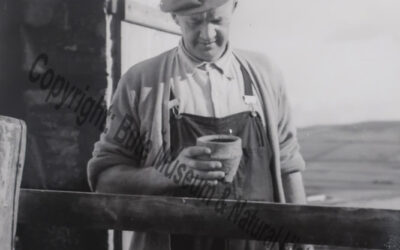

Kildavanan Food VesselMr Lochhead of Kildavanan Farm holding the Bronze Age food vessel he discovered in 1952.
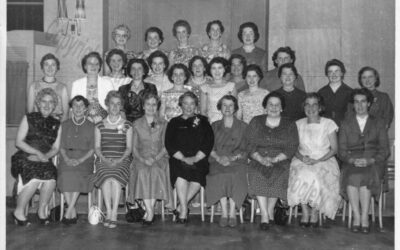
Ladies Choir c.1958-1962Back Row: May Mullen, Jessie Ross, Jean McPhail, Helen Lappin, Jean CurrieSecond Row: Margaret Lawson, Betty Cruickshanks, Anna Drew, Amelia Noddings, Evelyn SmithThird Row: Olive McClay, Nancy Lockhart, Helen MacLennan, Jean Kerr, Mhiari...

Wyndham Park has changed little since this photo was taken in the 1920s other that the disappearance of the tennis courtsand the appearance of the wooden houses. (P03-0030, A1.15)

This photograph of the miniature railway at Ettrick Bay was taken in 1938. After the withdrawal of the electric tramservice to Ettrick Bay it was felt by the Rothesay Tramways Company that a new tourist attraction was required at EttrickBay to encourage visitors to...

Craigmore Pier was constructed in 1877 of iron, but this corroded so badly that the pier was closed and sold in 1888. Theiron piles were replaced with wooden ones and the pier reopened to steamer traffic. Passenger numbers dropped after theFirst World War and the last...
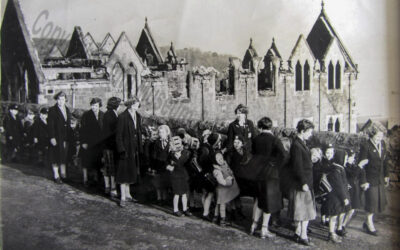
Little did the Rothesay Academy pupils realise when they left school on Friday 5 March 1954 that they would neverreturn to the school that they knew, as that night saw an arson attack resulting in the total destruction of the schoolbuilding. An assembly was held in...

This unusual photograph shows a flying boat fuselage being rolled out from a shed at Ardmaleish boatyard. This yardwas used during World War I for the construction of flying boats which were flown by pilots of the Royal Naval AirService. (P03-3200, B21.28)

Among the postcard collection held by Bute Museum are a couple of cards, one sent from a small boy staying at theStevenson Home and one from his two sisters at the Agnes Patrick Home. These homes were established in 1900 byAgnes Patrick, a Bute philanthropist with the...
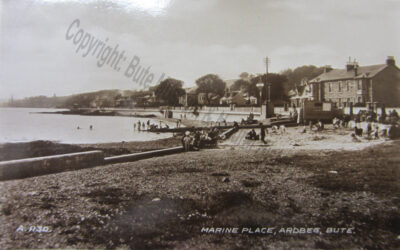
This photograph of Ardbeg Point was taken in 1934 and shows the extensive low walls built to stop the sandy area frombeing washed away by the tides. The remains of these walls can still be seen today. (P03-3959, A1.256) (Ardbeg)
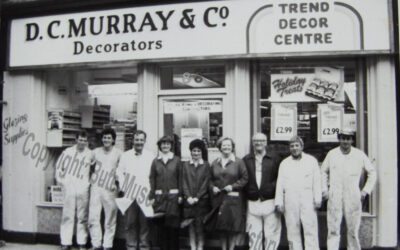
The staff of D.C. Murray’s shop in Montague Street John Kernaghan, Ian Jardine, Alistair Speirs, Elizabeth Speirs,unknown, Vera Cameron, Harry Thomson, Joe McNeil, Martin Gillies (P03-3448, B9.27) (Business)

This view, around 1903, was taken from High Street looking over to Barone Road and shows the Meadows and pavilion.Note that only the top two properties have been built at the top end of Auchnacloich Road. In Frank Arneil Walker’sbook Architecture of Argyll and Bute...
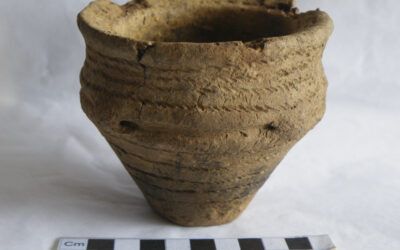
Object: Miniature Food VesselDate: Bronze AgeDescription: A very small ‘Yorkshire vase’ type vessel. 86mm high, maximum diameter 82 mm. It hasfour perforated lugs and is decorated with an impressed cord design. This type of vessel is widespreadthroughout Bronze Age...
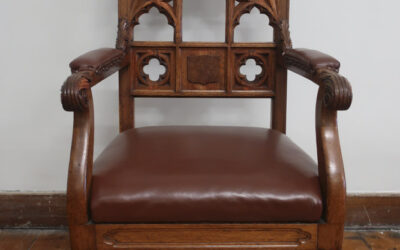
Object: Carved Oak ChairDate: 19th centuryDescription: Solid oak chair with heavily carved back, with pierced fretwork in the Gothic style. This isone of a set of five chairs. A silver plaque on the back reads ‘Presented by the Marquis of Bute to theMagistrates of...
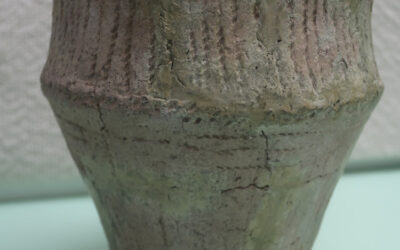
Object: Food VesselDate: Bronze AgeDescription: Restored food vessel 125mm x 110mm. Impressed with cord decoration. The vessel wasplaced upside down in the cist.Origin: From a cist at Kildavanan, discovered by farmer Mr Lochhead in 1952 while ploughing.Excavated in...
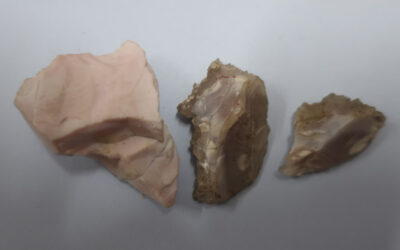
Object: Agate toolsDate: NeolithicDescription: Three agate scrapers. End scraper 45mm x 25mm tapering to a point. Side scraper 40mm x25 mm. Side scraper 30mm x 20mm.Origin: As flint does not occur naturally on Bute, other materials were sourced to make...

Object: Prison DoorDate: 19th CDescription: Door from Rothesay Jail. Following the demolition of the Tolbooth, the prison was situated besidethe County Buildings in High Street. Life was hard for a prisoner, who would be occupied in the activitiesof stone breaking,...

Object: Food vesselDate: Bronze AgeDescription: Food vessel of the ‘Yorkshire Vase Type’ dating from around 2000 B.C. Decorated all overwith line and dot patterns and with three lugs. Height 162mm and 160mm diameter at the mouth. Foundalmost intact with one lug broken...

Object: Long case clockDate: 19th cDescription: Long case signed by Robert Smith, Irven. The dial is of brass and silver with brass spandrels. Thecase is pine. Robert Smith was working in Irvine in 1820.Origin: The clock was gifted to the Museum by the family of James...
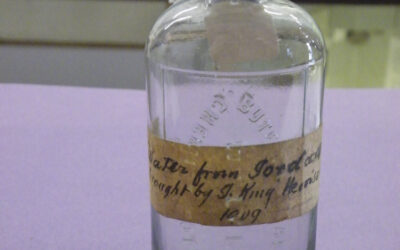
Object: Bottle of Jordan WaterDate: 20th cDescription: A clear glass bottle from Bute Medical Hall containing ‘Water from Jordan brought by J KingHewison 1909’. It is topped with an olive wood stopper.Origin: James King Hewison was minister of the High Kirk in...
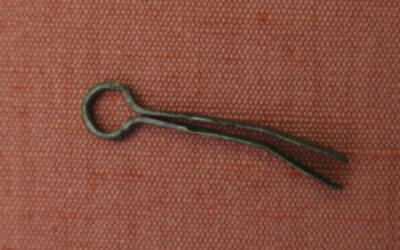
Object: TweezersDate: Iron AgeDescription: Bronze tweezers 430mm x 50mm from the Fort at Dunagoil.Origin: Found during the excavation of the Iron Age hill fort at Dunagoil, at the south end of Bute.Excavations took place between 1913-15 and 1919 under the direction of...
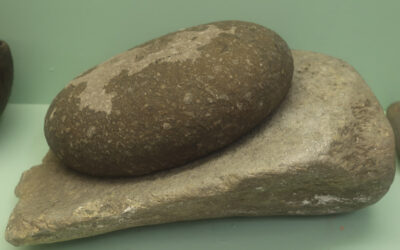
Object: Saddle QuernDate: NeolithicDescription: A saddle quern with rubbing stone. The base of schistose grit is broken and probably half itsoriginal length, now 360mm x 270mm. The upper stone is oval porphyritic basalt with one face smooth,dimensions 240mm x 165mm x...
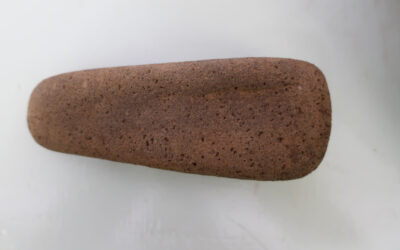
Object: Sharpening StoneDate: NeolithicDescription: A sharpening stone made from weathered basalt. Four sided, with each side showing signsof use. Length 60mm tapering to 40 mmOrigin: In the late 19th century and early 20th century, a gravel pit at Townhead was being...

Object: Enamel signDate: 20th centuryDescription: Enamel on metal warning sign, advising people to exercise care when taking out one of themany rowing boats available for hire. Approximately 20cms.Origin: From one of the boat-hiring stations along the Esplanade. There...
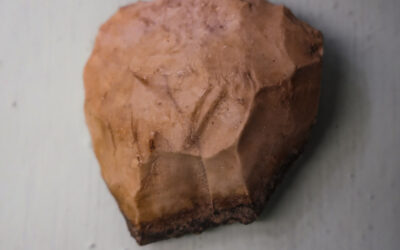
Object: Flint ScraperDate: NeolithicDescription: Flint scraper from the Neolithic burial cairn at Glecknabae. 35mm long by 35wide narrowingto 15mm.Origin: In 1903 Professor Thomas H Bryce undertook explorations of all the known tumuli on the islandof Bute. One of the...
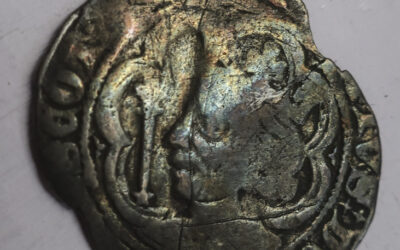
Object: Silver Groat Date: 14th c Description: A Scottish silver groat from the reign of Robert II. Minted in Edinburgh. The groat was worth fourpence. Origin: Robert II succeeded his Uncle, David II, to become King of Scots in 1371. He reigned until 1390. Robert II...
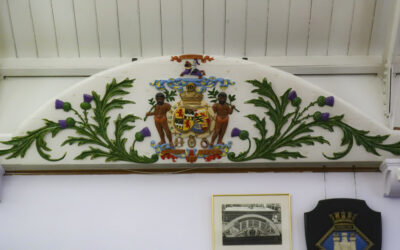
Object: Carving from PS Duchess of FifeDate: 20th cDescription: A wooden carving from the paddle box of the Paddle Steamer Duchess of Fife. The carvingrepresents the arms of the Duchess of Fife who was Louise, the Princess Royal, granddaughter ofQueen Victoria.Origin:...

Object: Wooden Plaque Date: 20th c Description: Wooden plaque carved by a former German P.O.W. commemorating the campaigns in which the 241 (2nd Bute) Anti-Tank Battery Royal Artillery served. The Unit was formed in 1939 under the command of Major ATJ Maclagan and...

Object: Watercolour Painting of a Puffer Date: 20th c Description:. Watercolour painting of Pibroch in Rothesay Bay. Puffers were the workhorses of the Clyde estuary and West Coast, carrying anything and everything. The Pibroch was launched in 1923 and serviced the...
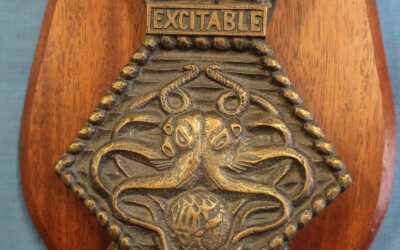
Object: Crest from X-Craft Date: 20th C Description: Brass crest mounted on a wooden shield. This crest came from midget submarine HMS/M Excitable XE12. This craft was one of the second group of midget submarines. It was built by Marshall in 1944 and paid off in 1952....
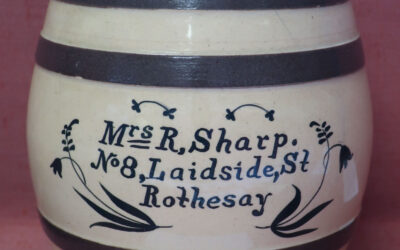
Object: Pottery Container Date: 19th century Description: Pottery container inscribed ‘Mrs R Sharp, No 8 Laidside (sic) St, Rothesay’. These houses were demolished many years ago. Mrs Sharp’s daughter Janet married Alexander Stewart, the blacksmith at Ambrisbeg Smiddy...
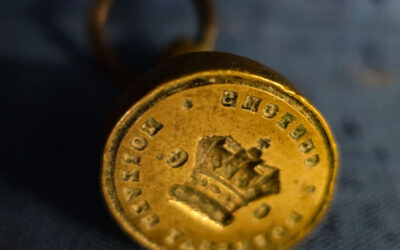
Object: Customs Seal Date: 19th century Description: A brass seal with the words ‘Customs Rothesay Station’. The Custom House was in High Street in the building known as the Mansion House. Built in 1680 for George Cunningham, this was the largest house in Rothesay at...
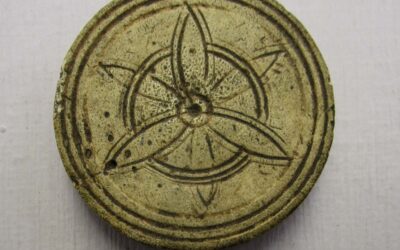
Object: Draughtsman Date: Medieval Description: A bone gaming piece with an incised decoration, probably from a set of Draughts. Origin: Found at Rothesay Castle when the 3rd Marquis of Bute commissioned work to be done in the 19th c.
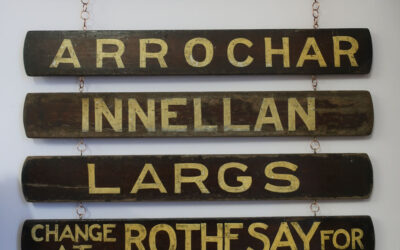
Object: Destination Boards Date: 20th c Description: Destination board from the Paddle Steamer Talisman. There were two vessels of that name, the first built in 1896 and the second in 1935. The name part is from the Talisman, the place name boards are from a...
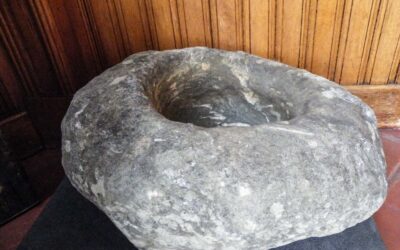
Object: Knocking Stone Date: Medieval Description: Knocking stones were made out of large boulders or were sometimes cut into bedrock. They were hollowed out in the centre. Their purpose was the pounding of grain or roots using a rounded stone or a wooden mell. Husks...
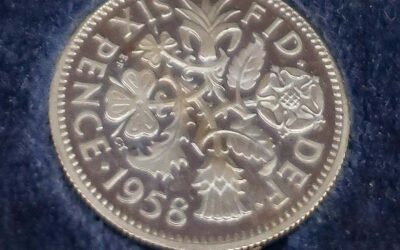
Object: Sixpence Coin Date: 20th c Description: A 1958 sixpence in a Royal Mint box. This sixpence was given to Queen Elizabeth II on her visit to Rothesay in 1958 so that she could give it back! The Queen was to be presented with a dirk for Prince Charles (Duke of...
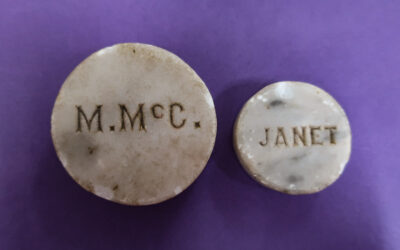
Object: Marble Peevers Date: 20th century Description : A pair of marble peevers. These were used for playing hopscotch and most children used an empty boot polish tin or a flat stone. These two, white marble peevers belonged to Janet and Margaret McCrone who...