
About Bute Bird Group

Bute Bird Group is a part of Buteshire Natural History Society and is for members of the society who have an interest in the varied bird life on the Isle of Bute. New members are always welcome.
Regular indoor meetings are held in the society’s meeting room within The Museum, Stuart St, Rothesay and a programme of monthly field trips is arranged for members to attend throughout the year.
The Bute bird list stands at over 200 species including wintering flocks of Greylag and Greenland White-fronted Geese and occasional rarities such as Little and Snowy Egret, and Black-throated Thrush.
There are a number of good birding sites on the island with a wide variety of habitat available to be explored. The many freshwater lochs are home to a good variety of wildfowl, the sandy beaches attract a number of wading species and the woodlands are home to many songbirds.
Bird hides are located at some of the best locations including Loch Ascog, home to Great Crested Grebe and other wildfowl, The Kirk Dam (Loch Fad) where Whooper Swan regularly winter and recently Gadwall were in residence, and Ettrick Bay, a great site for waders, wildfowl and a variety of seabirds.
A fourth hide has recently opened on the south side of Loch Quien, a freshwater loch to the south of Loch Fad where a wide variety of water birds can be viewed all year round.
The watercolour of the Hen Harrier in the Homepage was kindly produced by Brian Large, a local artist
Bute’s Best Bird Sites
No Results Found
The page you requested could not be found. Try refining your search, or use the navigation above to locate the post.
Migrant Arrivals to Bute

Wheatear
The wheatears are passerine birds of the genus Oenanthe. They were formerly considered to be members of the thrush family, Turdidae, but are now more commonly placed in the flycatcher family, Muscicapidae. The name "wheatear" is not derived from "wheat" or any sense...
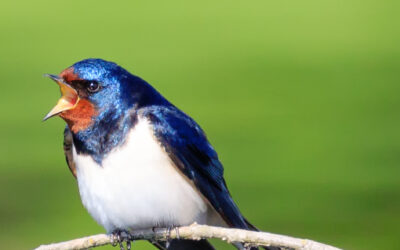
Swallow
The barn swallow (Hirundo rustica) is the most widespread species of swallow in the world. It is a distinctive passerine bird with blue upperparts and a long, deeply forked tail. It is found in Europe, Asia, Africa and the Americas. There are six subspecies of barn...
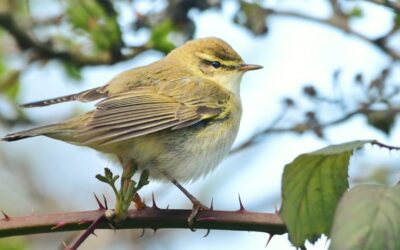
Willow Warbler
The willow warbler (Phylloscopus trochilus) is a very common and widespread leaf warbler which breeds throughout northern and temperate Europe and the Palearctic. It is strongly migratory, with almost all of the population wintering in Sub-Saharan Africa....

Gannet
Gannets are seabirds comprising the genus Morus, in the family Sulidae, closely related to boobies. They are large white birds with yellowish heads; black-tipped wings; and long bills. Northern gannets are the largest seabirds in the North Atlantic, having a...

Chiffchaff
The common chiffchaff (Phylloscopus collybita), or simply the chiffchaff, is a common and widespread leaf warbler which breeds in open woodland. It is a migratory passerine which winters in southern and western Europe, southern Asia and north Africa. Greenish-brown...

Osprey
The osprey or more specifically the western osprey (Pandion haliaetus) — also called sea hawk, river hawk, and fish hawk — is a diurnal, fish-eating bird of prey with a cosmopolitan range. It is a large raptor, reaching more than 60 cm (24 in) in length and 180 cm (71...
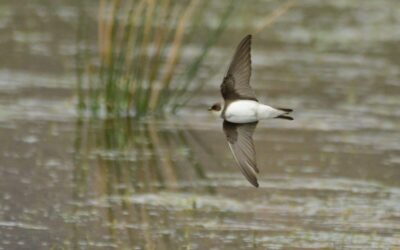
Sand Martin
The sand martin (Riparia riparia) or European sand martin is a migratory passerine bird in the swallow family. It has a wide range in summer, embracing practically the whole of Europe and the Mediterranean countries and across the Palearctic to the Pacific Ocean. It...

Lesser Black-backed Gull
The lesser black-backed gull (Larus fuscus) is a large gull that breeds on the Atlantic coasts of Europe. It is migratory, wintering from the British Isles south to West Africa. Slightly smaller than a herring gull, the lesser black-backed gull has a dark grey to...