
About Bute Bird Group

Bute Bird Group is a part of Buteshire Natural History Society and is for members of the society who have an interest in the varied bird life on the Isle of Bute. New members are always welcome.
Regular indoor meetings are held in the society’s meeting room within The Museum, Stuart St, Rothesay and a programme of monthly field trips is arranged for members to attend throughout the year.
The Bute bird list stands at over 200 species including wintering flocks of Greylag and Greenland White-fronted Geese and occasional rarities such as Little and Snowy Egret, and Black-throated Thrush.
There are a number of good birding sites on the island with a wide variety of habitat available to be explored. The many freshwater lochs are home to a good variety of wildfowl, the sandy beaches attract a number of wading species and the woodlands are home to many songbirds.
Bird hides are located at some of the best locations including Loch Ascog, home to Great Crested Grebe and other wildfowl, The Kirk Dam (Loch Fad) where Whooper Swan regularly winter and recently Gadwall were in residence, and Ettrick Bay, a great site for waders, wildfowl and a variety of seabirds.
A fourth hide has recently opened on the south side of Loch Quien, a freshwater loch to the south of Loch Fad where a wide variety of water birds can be viewed all year round.
The watercolour of the Hen Harrier in the Homepage was kindly produced by Brian Large, a local artist
Bute’s Best Bird Sites

St Ninians Bay / Straad
Grid Refs St Ninian’s Bay NS040617 Straad Saltmarsh NS035617 How to get there The Straad and St Ninian’s Bay are about 4 miles from Rothesay. From the pier walk (or drive) south on High Street, passing Rothesay Castle, turning right onto...

Loch Quien
Grid Ref - NS064593 How to get there From Rothesay Pier travel south, passing the castle on your right, for 4 miles on the B881, then turn right (west) on the A844 Travel for 500m to the signposted path to the...

Kirk dam
Grid Ref- NS082626 How to get there The Kirk Dam is about a 2 miles from Rothesay. From the pier walk (or drive) south on High Street, taking 2nd on the right (south west) into Russell Street. Follow Russell St out of Rothesay for 3/4 mile, bearing left (south)...

Greenan Loch
Grid Ref – NS067640 How to get there The Greenan Loch is about 2 miles from Rothesay. From the pier walk (or drive) south on High Street, passing the castle on your right, and then turning 2nd right (south west) into Russell...

Ettrick Bay
Grid Ref – NS035657 How to get there Infrequent bus service from Rothesay, number 490. On foot/ cycle/ car – From Rothesay Pier turn right (head north) on A844 towards Port Bannatyne and Kames Bay. After approx 3 miles, at Kames Bay,...

Loch Fad
Grid Ref – NS078625 How to get there Loch Fad is about 2 miles from Rothesay. From the pier walk (or drive) south on High Street. Once passed the castle, take 2nd on the right...
Migrant Arrivals to Bute

Wood Warbler
The wood warbler (Phylloscopus sibilatrix) is a common and widespread leaf warbler which breeds throughout northern and temperate Europe, and just into the extreme west of Asian Russia in the southern Ural Mountains. This warbler is strongly migratory and the entire...

Redstart
The common redstart (Phoenicurus phoenicurus), or often simply redstart, is a small passerine bird in the genus Phoenicurus , and is an Old World flycatcher (family Muscicapidae) The Common Redstart shows some affinity to the European Robin in many of its habits and...

House Martin
The common house martin (Delichon urbicum), sometimes called the northern house martin or, particularly in Europe, just house martin, is a migratory passerine bird of the swallow family which breeds in Europe, north Africa and across the Palearctic; and winters...

Whitethroat
The common whitethroat (Curruca communis) is a common and widespread typical warbler which breeds throughout Europe and across much of temperate western Asia. This small passerine bird is strongly migratory, and winters in tropical Africa, Arabia, and Pakistan. This...

Common Cuckoo
The common cuckoo (Cuculus canorus) is a member of the cuckoo order of birds, Cuculiformes, which includes the roadrunners, the anis and the coucals. This species is a widespread summer migrant to Europe and Asia, and winters in Africa. It is a brood parasite, which...

Grasshopper Warbler
The common grasshopper warbler (Locustella naevia) is a small passerine bird found in short dense vegetation, often close to water. It is a medium-sized warbler about 13 cm (5 in) long. The adult has a streaked brown back and whitish grey underparts which are...
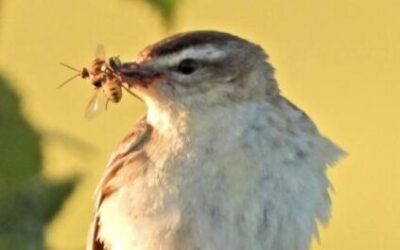
Sedge Warbler
The sedge warbler (Acrocephalus schoenobaenus) is an Old World warbler in the genus Acrocephalus. It is a medium-sized warbler 11.5–13 cm (4.5–5.1 in) long and weighing around 12 g (0.42 oz) with a brown, streaked back and wings and a distinct pale supercilium....

Common Sandpiper
The common sandpiper (Actitis hypoleucos) is a small Palearctic wader. This bird and its American sister species, the spotted sandpiper (A. macularia), make up the genus Actitis. They are parapatric and replace each other geographically; stray birds of either species...
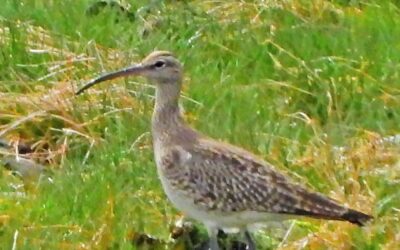
Whimbrel
Numenius phaeopus (Linnaeus, 1758) Family: Charadriiformes > Scolopacidae Whimbrel is a smaller version of the Curlew, with a shorter, straighter then down-curved bill and pale crown-stripe. The ‘seven-whistle’ call is diagnostic. This elegant wader has a very...
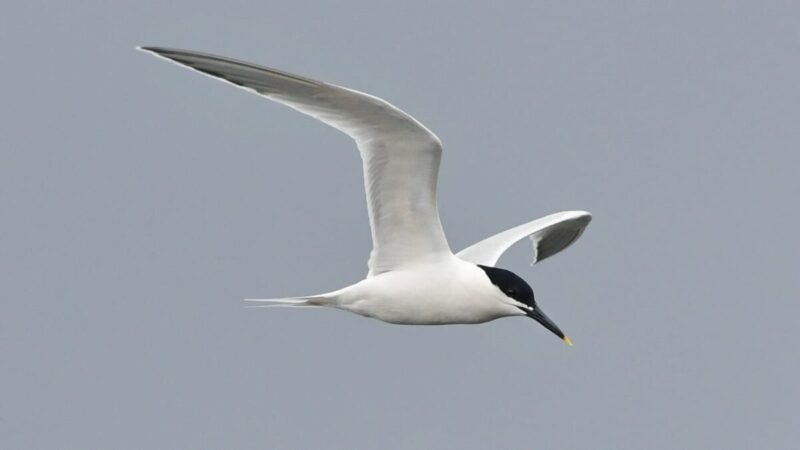
Sandwich Tern
The Sandwich tern (Thalasseus sandvicensis) is a tern in the family Laridae. It is a medium-large tern with grey upperparts, white underparts, a yellow-tipped black bill and a shaggy black crest which becomes less extensive in winter with a white crown. Its short legs...