On Tuesday 11th November, the bird group’s indoor meeting was on the topic of Owl pellet dissection, presented by Paul Unwin. The audience were held enthralled by Paul’s description and examples of the types of prey he would expect to find in an Owl pellet, and led us through indicators to look for when trying to identify bones found. Following this, the audience were invited to volunteer for dissecting pellets. These had been provided by Billy (from the Kingarth area), and Ian (from Glen More). Once everyone had a try, Paul displayed some of the more interesting bones under a microscope. I think we were all taken aback by just how small and fragile the bones actually were, having just seen the slides Paul used for illuminating his presentation.
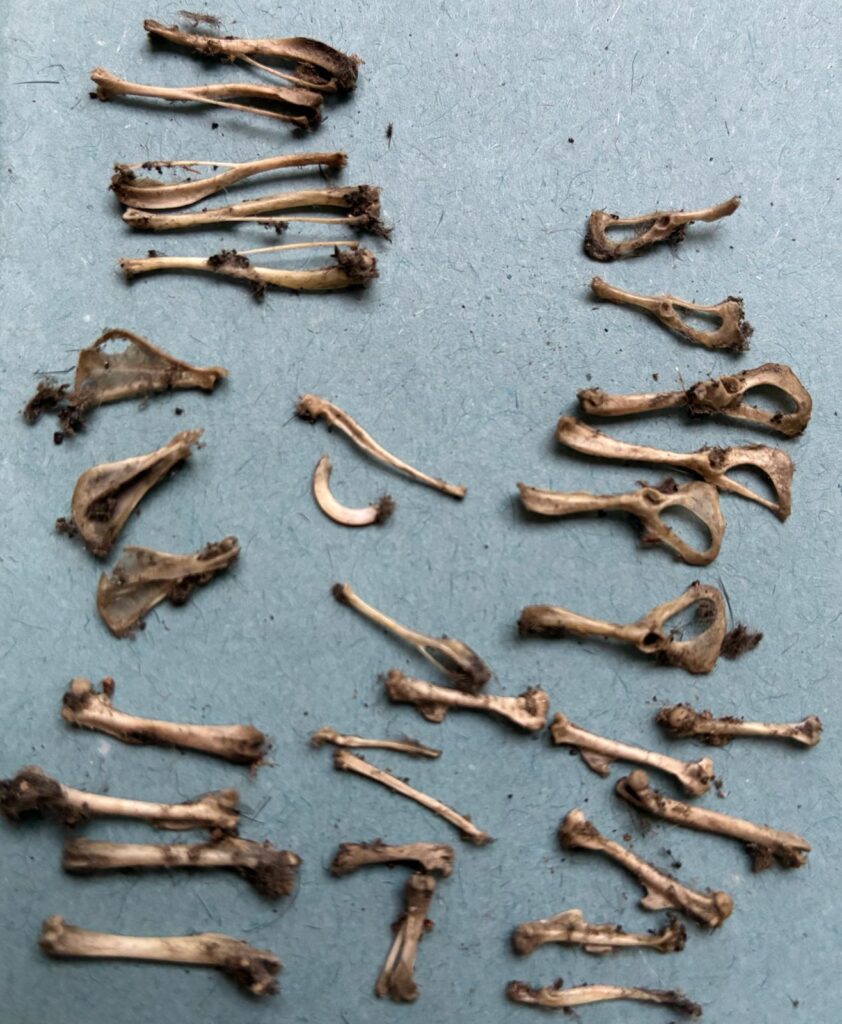
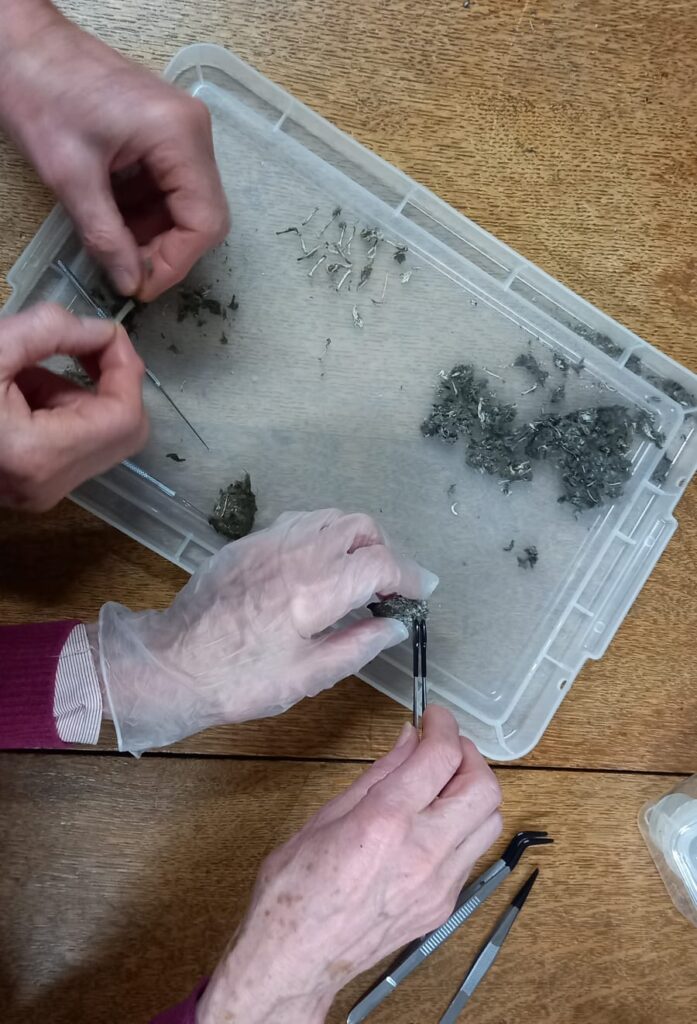
As you can see from the slides below there were no shortage of volunteers, and indeed, no shortage of bones found either. We all look forward to Paul’s final assessment of what was found. He is not only hoping to identify the mammals, eg mice, voles and shrews but also to use the pelvic bones to try and identify male/female specimens. Fascinating!
Everyone had a wonderful evening and Paul was enthusiastically thanked for his presentation. It is one which I am sure we will be talking about for a long time.
-
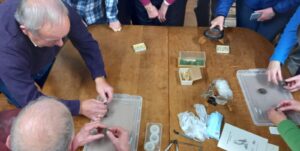
- everyone gathered round to see what is being found

-
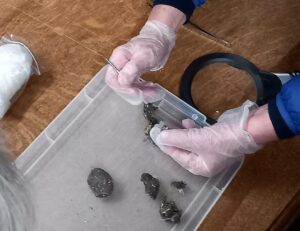
- tiny fragments of bone need careful handling

-

- concentration on delicate work

-
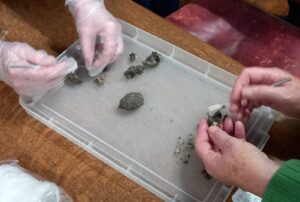
- sifting through the pellets to extract the bones
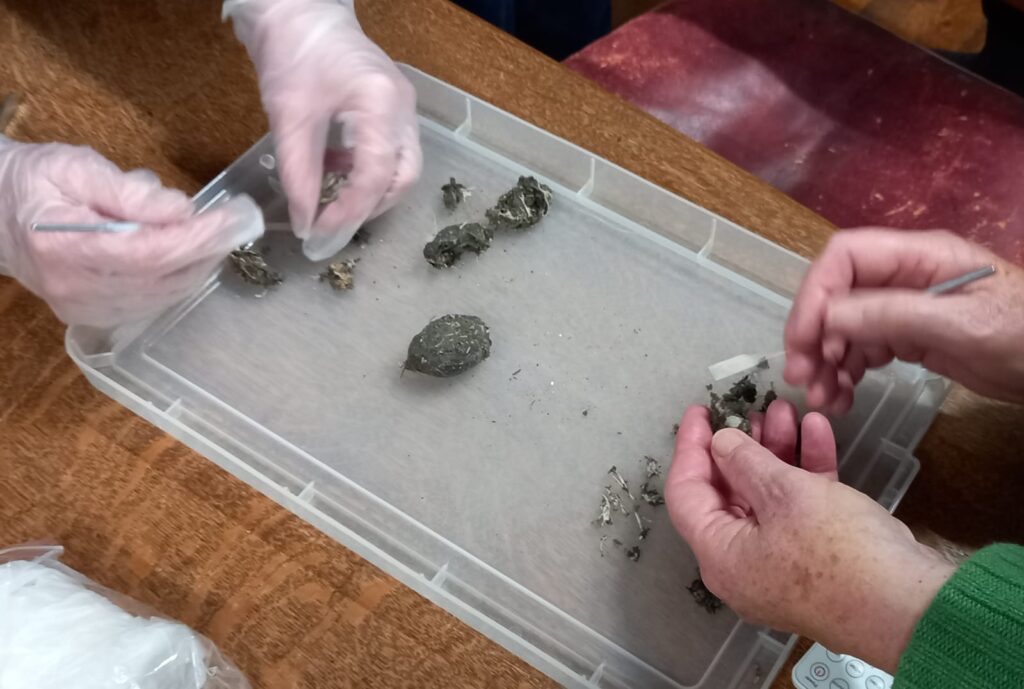
-
- very delicately sifting out the bones
-

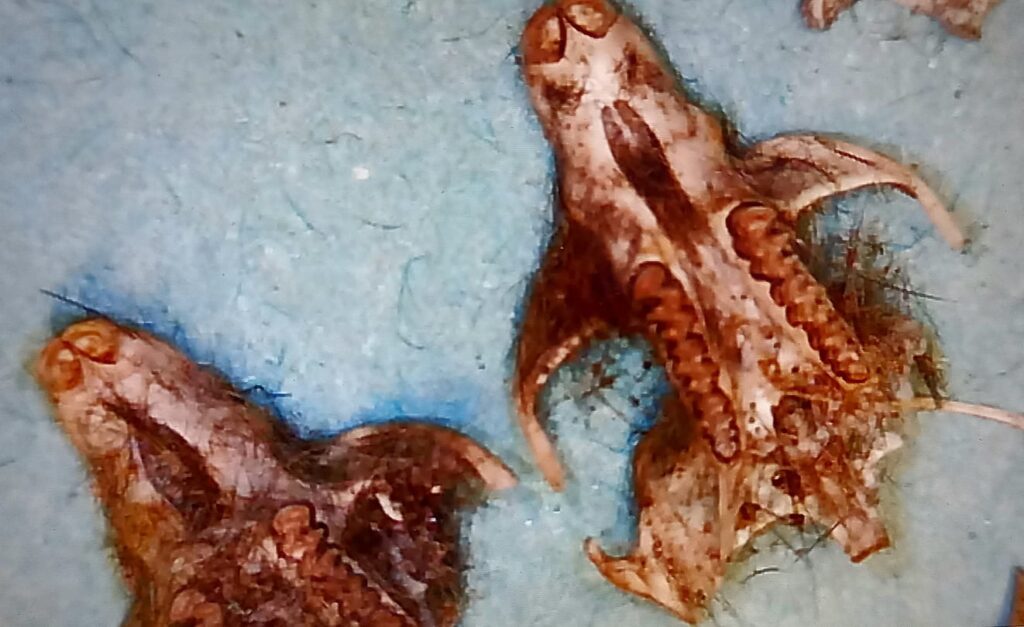
- examples of mouse skulls found, enlarged under a microscope
-
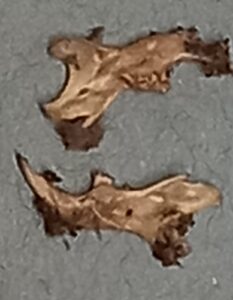
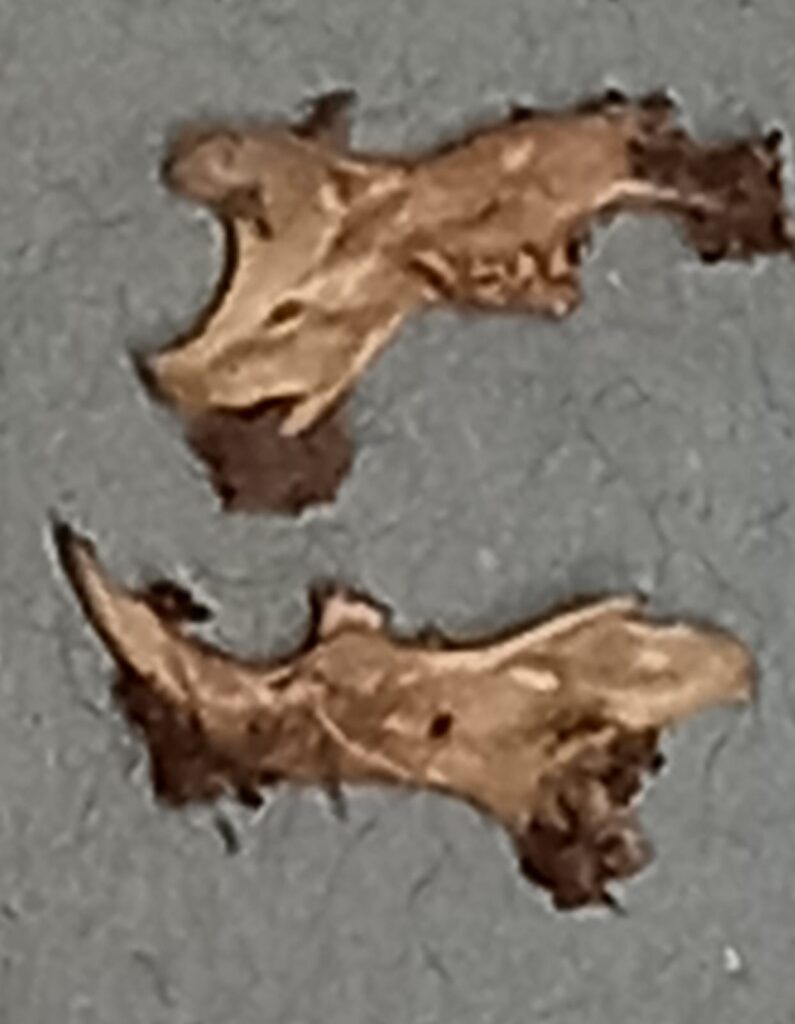
- examples of jawbones found, enlarged under a microscope
-
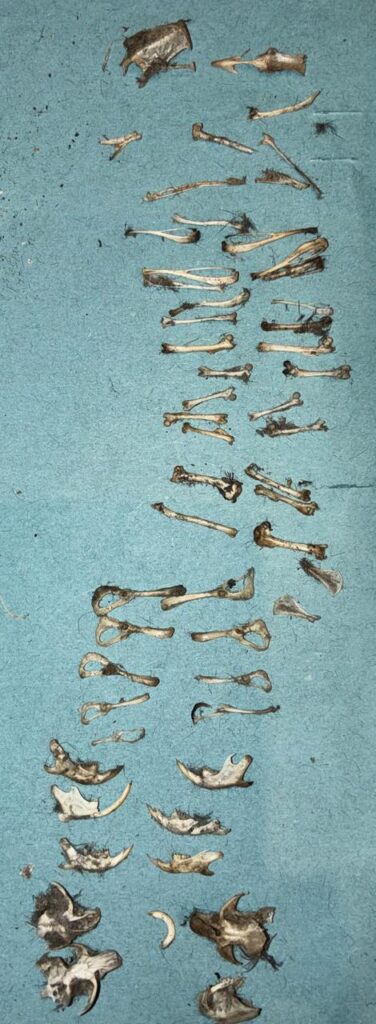
- Assemblage of bones from Glen More pellets (Ian's)
-
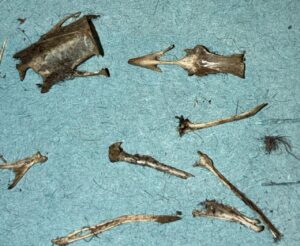
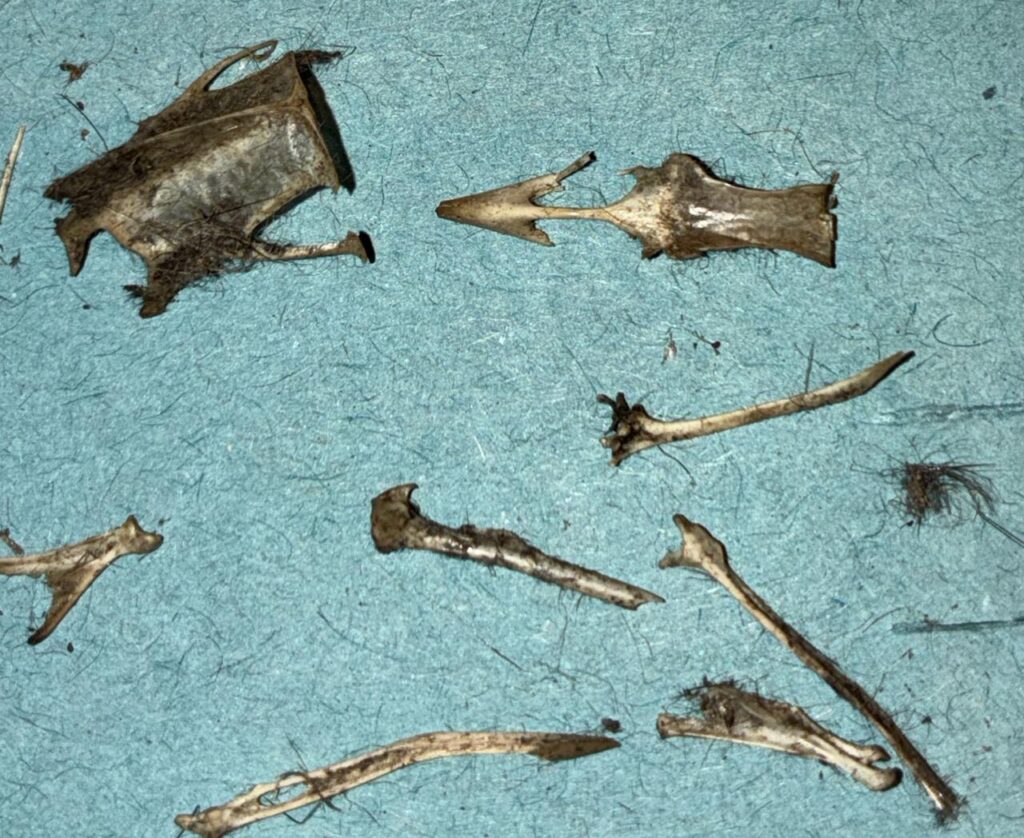
- Glen More (Ian) top - breast bone and bill of a small bird and some long bones
-
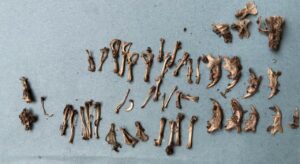
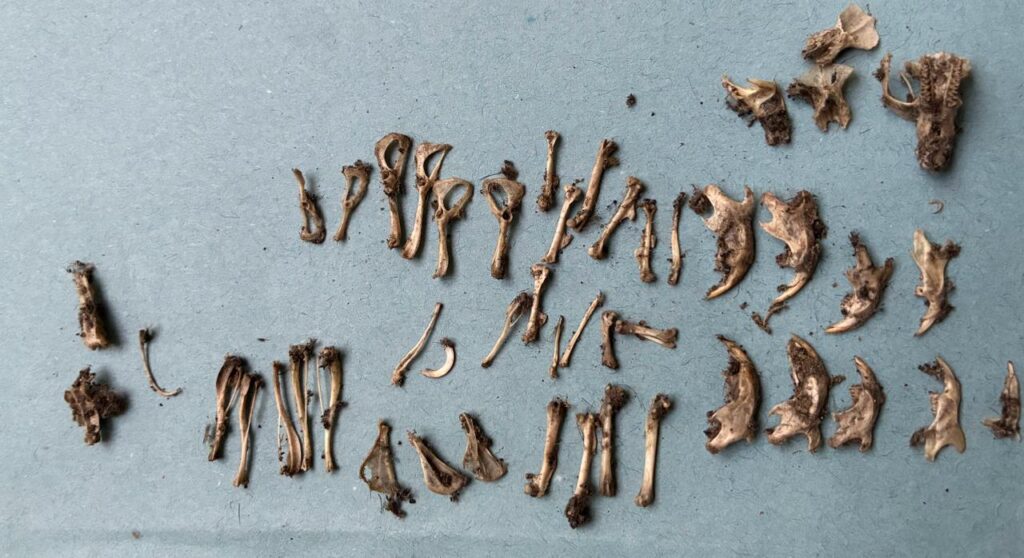
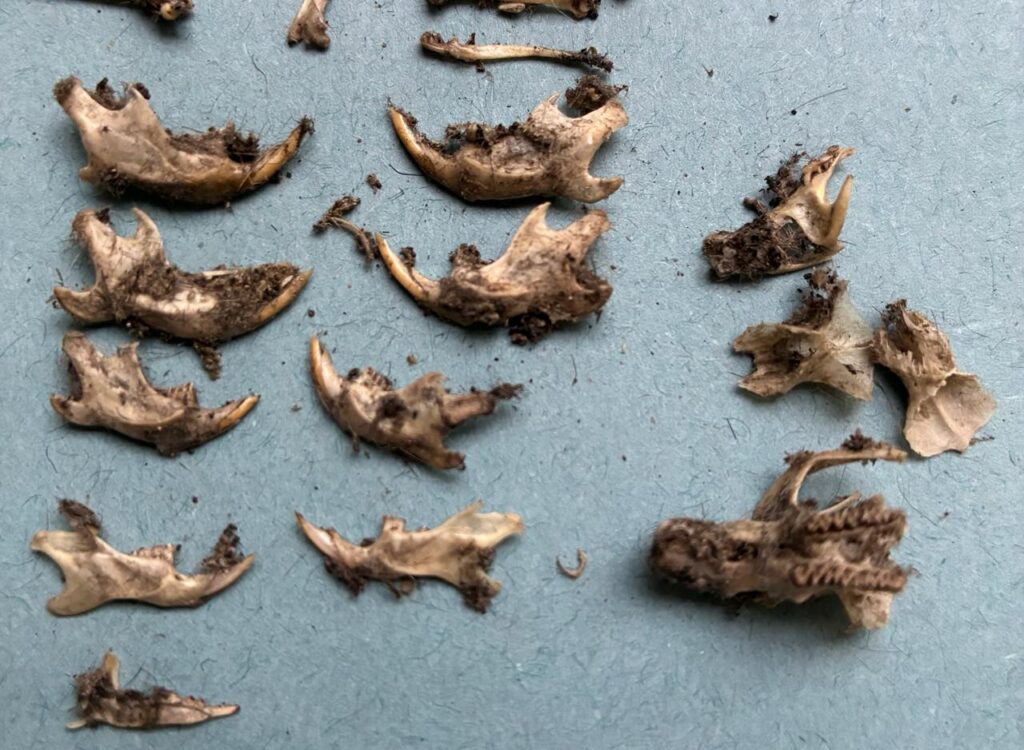
- Assemblage of bones from Kingarth pellets - showing voles, mice and a single shrew jaw bone.
-
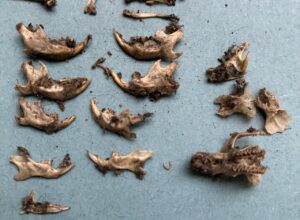
- close up of Kingarth pellets' skull bones
-
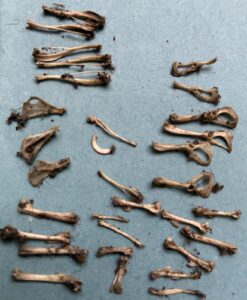
- close up of Kingarth pellets' long bones